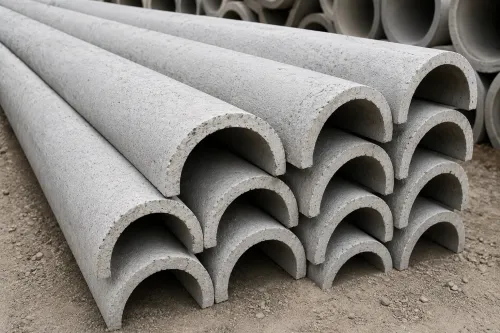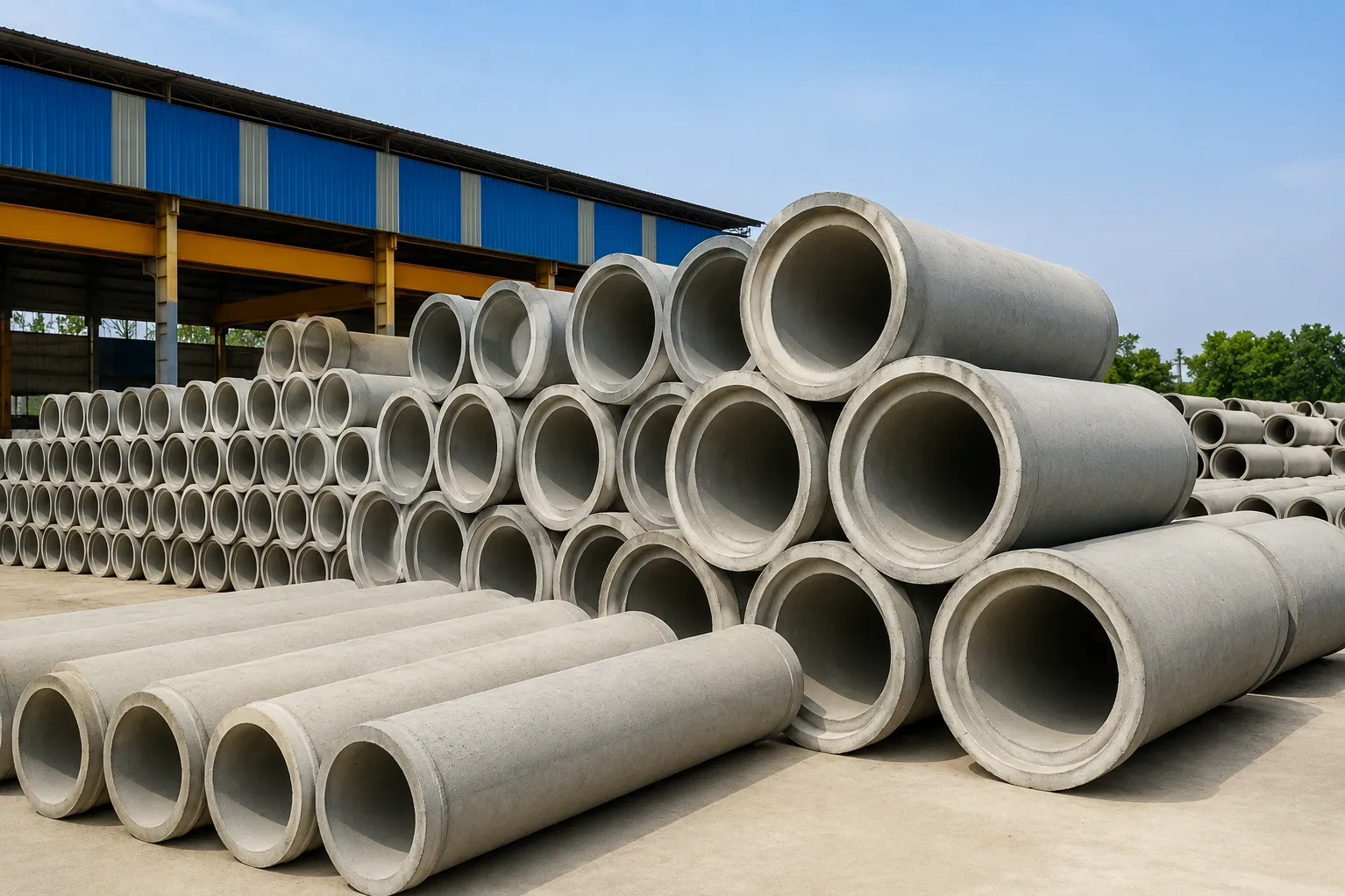
Drainage infrastructure has to manage water efficiently for years while dealing with soil pressure, traffic loads, changing weather conditions, and continuous exposure to moisture. This is why concrete drainage pipes remain widely used in municipal, industrial, residential, and infrastructure projects.
For contractors and project planners, understanding how RCC Pipe Manufacturers in Nagpur produce pipes can make specification and procurement decisions easier. Vishal Cement Product manufactures concrete products for infrastructure requirements where strength, dimensional consistency, and practical installation are important considerations.
Why RCC Pipes Are Used for Drainage
RCC stands for reinforced cement concrete. Unlike plain cement pipes, RCC pipes contain reinforcement that improves their ability to withstand external loads and structural stresses.
They are commonly considered for:
- Stormwater drainage networks
- Roadside drainage systems
- Sewer and wastewater lines
- Industrial water management
- Culverts and crossings
- Residential development projects
- Agricultural drainage
The appropriate pipe specification depends on factors such as diameter, installation depth, expected load, soil conditions, flow requirements, and project design.
What Makes a Good RCC Pipe
Pipe quality involves more than visible surface appearance. Important factors include concrete quality, reinforcement placement, wall thickness, curing, dimensions, and joint compatibility.
Uniform dimensions are especially important when several pipe sections need to be connected across a long drainage route. Inconsistent sizes can complicate alignment and increase installation effort.
Nagpur's Infrastructure Requirements
Nagpur and surrounding parts of Maharashtra experience significant seasonal rainfall, making planned stormwater management important for roads, layouts, industrial premises, and developing areas.
Drainage systems should therefore be designed around actual water flow and site conditions rather than simply selecting a convenient pipe diameter.
Choosing the Correct Specification
Before ordering RCC pipes, project teams should determine:
- Required internal diameter
- Total pipeline length
- Installation depth
- Expected external loading
- Jointing requirements
- Site accessibility
- Applicable project specifications
These details help manufacturers understand the actual application and reduce the possibility of ordering unsuitable products.
Vishal Cement Product can support project requirements by supplying RCC products according to relevant infrastructure applications. Early coordination between the project team and manufacturer can also simplify quantity planning and delivery scheduling.
RCC pipes may appear to be straightforward construction products, but their performance depends heavily on correct specification, manufacturing quality, transportation, installation, bedding, and jointing. Paying attention to these factors helps create drainage infrastructure capable of serving the intended application efficiently over the long term.
Keywords