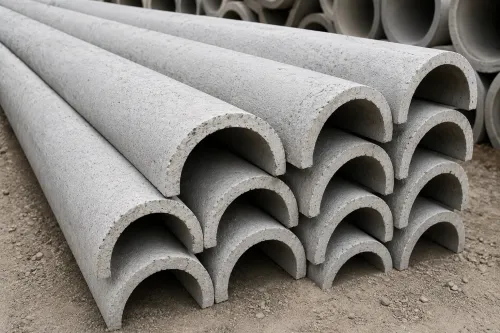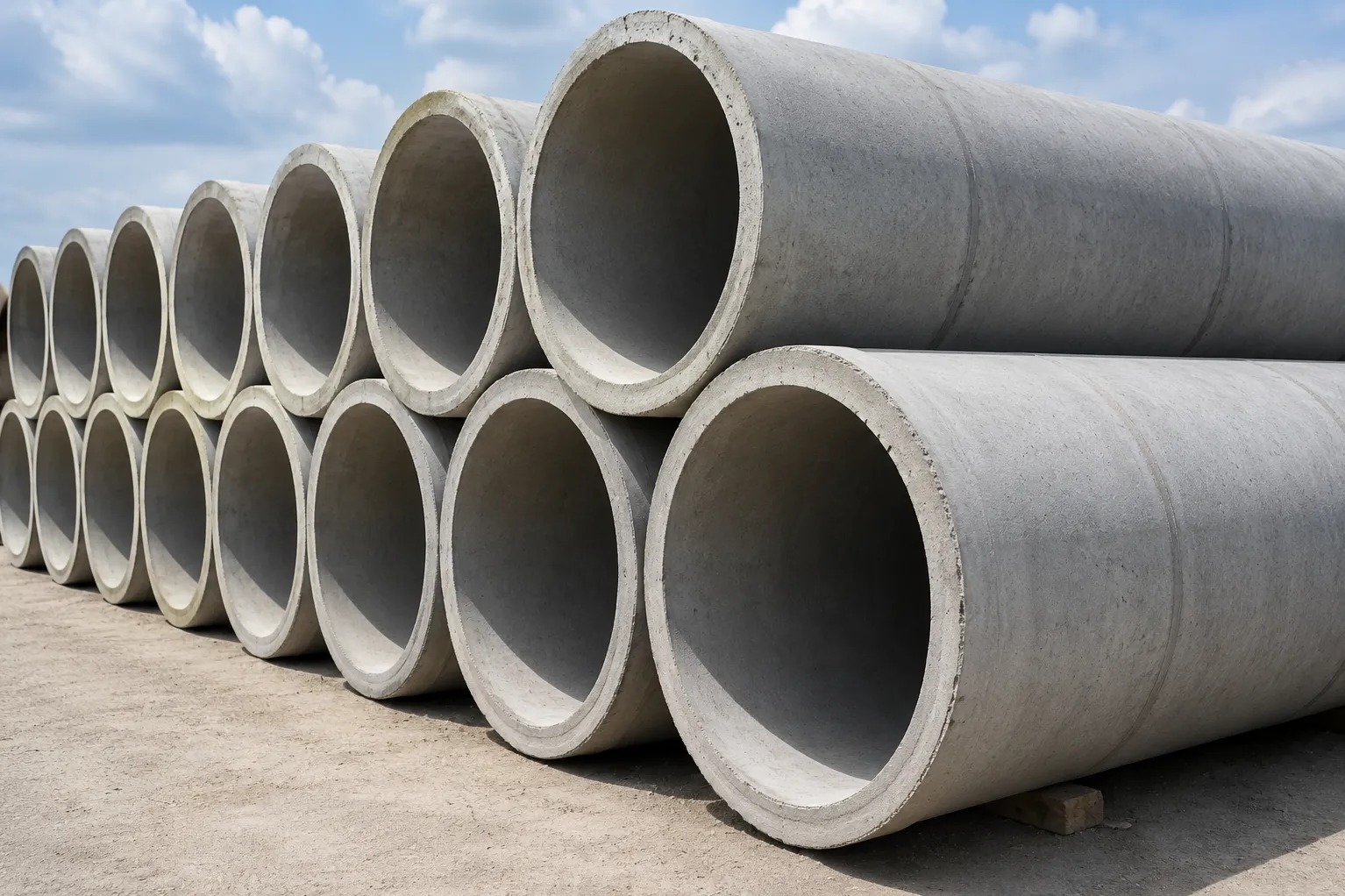
Concrete spun pipes are used in civil works where strength, consistent formation, and reliable dimensions are important. However, buyers comparing manufacturers should look beyond pipe diameter and quoted price.
Choosing a Concrete Spun Pipe Manufacturer requires evaluating how the product is manufactured, whether specifications match the project, and how reliably quantities can be supplied. Vishal Cement Product serves infrastructure requirements from Nagpur with precast concrete manufacturing capabilities.
How Spun Concrete Pipes Are Produced
Spun pipe production uses rotational movement during manufacturing. This process helps distribute and compact the concrete within the mould.
The resulting product quality depends on controlled material proportioning, reinforcement where applicable, mould condition, spinning procedures, curing, and dimensional consistency.
What Buyers Should Evaluate
Before finalizing a manufacturer, review several practical factors.
Product specifications: Confirm diameter, length, wall thickness, joint configuration, and required class.
Manufacturing consistency: Pipes supplied in one batch should maintain dependable dimensions to simplify installation.
Application suitability: Explain whether the pipes will be used for drainage, sewerage, culverts, industrial works, or another application.
Quantity capability: Large infrastructure projects may require phased supply over several weeks or months.
Delivery planning: Concrete pipes are heavy, making vehicle access and unloading arrangements important.
Price Should Not Be the Only Criterion
A lower initial quotation can become less attractive if inconsistent dimensions, damaged units, delayed supply, or unsuitable specifications create installation problems.
Project procurement should therefore consider total project impact rather than only per-unit cost.
Local Supply Around Nagpur
For projects in Nagpur and nearby areas of Maharashtra, sourcing from a regional manufacturer can improve coordination. Site teams can discuss specifications, quantities, production planning, and dispatch schedules without unnecessarily complicated logistics.
This becomes particularly useful when construction progress changes and deliveries need to be coordinated with excavation or installation work.
Ask the Right Questions
Before placing an order, buyers can ask:
- Which sizes are available?
- What specifications can be manufactured?
- What joint types are offered?
- How should products be unloaded?
- What lead time applies to the required quantity?
- Can dispatches be planned in phases?
A suitable concrete spun pipe manufacturer should be able to discuss the product in relation to its actual application.
Procurement works best when technical requirements and logistics are evaluated together. By examining manufacturing capability, dimensional consistency, application suitability, handling, and supply planning, contractors can make a more informed decision and reduce avoidable complications during installation.
Keywords