A 300 mm pipe is not automatically adequate because drainage performance depends on catchment area, design rainfall, slope, inlet control, cover and traffic loading. By checking hydraulic capacity, RCC class, installation details, joint sealing and supplier records, you can decide whether RCC is suitable and specify the pipe without comparing incomplete quotations.
Key takeaways
- Check peak runoff against pipe capacity at the installed slope.
- Specify diameter, wall dimensions, cover depth and site loading.
- Select NP2, NP3 or NP4 from the required structural protection.
- Inspect joints, pipe condition and delivery records before installation.
Will a 300 mm RCC pipe carry your design flow?
A 300 mm RCC round pipe is hydraulically adequate only when peak runoff is below its available capacity at the installed slope and water level. Estimate peak runoff with Qp = C × i × A, using catchment area, Nagpur design rainfall intensity for the selected storm duration and return period, and the runoff coefficient.
Then compare it with Manning’s equation: Q = (1/n) A R^(2/3) S^(1/2).
- Use the actual internal diameter to calculate flow area A and hydraulic radius R; a 300 mm outside diameter is not a 300 mm flow diameter. Include roughness n, positive longitudinal slope, invert levels, inlet spacing and allowable headwater depth.
- Check inlet control, inlet losses, junction losses, outlet submergence and downstream tailwater. Straight-pipe full-flow capacity does not predict performance when a poorly formed connection or submerged outlet controls the system.
- Allow for silt and plastic blockage. In Nagpur monsoon conditions, provide catch pits, silt traps and cleanable chambers, and eliminate flat spots where sediment can settle.
| Condition | What changes | Decision |
|---|---|---|
| Small roadside drain or property connection | Small catchment, positive gradient and accessible inlets | 300 mm may suit |
| Minor stormwater branch | Capacity depends on rainfall, slope and headwater | Verify with both flow and level checks |
| Restricted downstream system | Tailwater, junction loss or blockage causes surcharge | Increase capacity or redesign the system |
An RCC pipe for drainage can serve a small branch, but never select it from diameter alone; check the downstream pipe, chamber and outlet before approving it.
Which diameter, dimensions and site conditions belong in the order?
A quoted 300 mm RCC round pipe usually refers to nominal internal diameter, not outside diameter. Confirm the actual dimensions before comparing it with another RCC pipe for drainage: a 300 mm outside-diameter pipe does not provide the same flow area as a 300 mm internal-diameter pipe.
| Dimension | What to confirm |
|---|---|
| Nominal diameter | The size used in the quotation |
| Internal diameter | Clear bore used for hydraulic calculations |
| Outside diameter | Overall size needed for trench clearance |
| Wall thickness | Thickness between the bore and outside surface |
| Effective laying length | Usable length after joints, not total pipe length |
| Joint profile | Socket-and-spigot, collar or plain-ended arrangement |
Ask for the manufacturer’s permitted dimensional tolerances as well as these nominal figures. Hydraulic diameter and structural class answer different questions: a heavier class withstands greater external loading, but it does not carry more water.
Specify the installation conditions for this rcc pipe for drainage:
- Bedding type and thickness, controlled trench width, and uniform bearing
- Haunch support with no voids, followed by staged, compacted backfilling
- Invert levels, positive gradient, groundwater and required dewatering
- Cover depth, pavement loading and construction-stage heavy vehicles
- Catch pits, silt traps and accessible chambers at sediment-prone low points
Voids beneath the haunch or uneven bedding create concentrated loads that can crack the barrel. Heavy vehicles crossing shallow cover before paving can exceed the assumed design load. Sediment deposited at a low point can reduce the effective bore and defeat an otherwise adequate hydraulic design.
Does NP2, NP3 or NP4 provide the required structural protection?
Choose NP2, NP3 or NP4 from the external load, not from the water flow. Under an IS 458:2000 project requirement, all three are non-pressure RCC pipe classes; NP3 has higher three-edge bearing strength than NP2, and NP4 has higher strength than NP3.
| Class | Structural meaning | Selection basis |
|---|---|---|
| NP2 | Lower three-edge bearing class | Light external loading with suitable cover and bedding |
| NP3 | Intermediate three-edge bearing class | Greater cover, traffic or earth loading than NP2 |
| NP4 | Higher three-edge bearing class | Higher verified external loading where the design requires it |
These descriptions do not replace design. Use the load tables in the applicable standard with actual bedding, cover depth, trench or embankment condition, pavement traffic, groundwater and construction-stage vehicle loading. Voids beneath the haunch, uneven bearing or shallow cover can overload a pipe even when its permanent road load appears acceptable.
Confirm whether the project specification cites IS 458:2000 or the later commonly referenced IS 458:2003 edition, and require the applicable edition in writing. A quoted 30 mm wall thickness alone cannot establish suitability. Assess class, reinforcement, internal diameter, concrete performance, bedding and loading together.
Before accepting a delivered lot, request:
- Pipe class and reinforcement details
- Batch identification linked to the lot
- Three-edge bearing test results
- Water absorption test results
- Visual inspection or acceptance records
A heavier class does not carry more water; internal diameter, gradient and hydraulic design control that capacity.
Will the joints and delivered pipes prevent drainage leakage?
Leakage depends on the joint system as much as the pipe barrel. Before buying an RCC pipe for drainage, ask in writing whether it is socket-and-spigot, collar-jointed or plain-ended; the available product information does not establish the joint type.
| Joint system | Request in writing | Main leakage risk |
|---|---|---|
| Socket-and-spigot | Joint profile, gasket material and specification, allowable gap and deflection | Twisted gasket, dirty groove or damaged spigot |
| Collar-jointed | Collar dimensions, mortar specification and curing requirement | Poor packing, movement or inadequate curing |
| Plain-ended | Jointing method, materials and permitted tolerance | Unsealed or misaligned connection |
Compare the joint profile, collar dimensions, gasket details, allowable joint gap and allowable deflection with the project drawing before purchase. A correctly installed rubber ring controls infiltration and exfiltration better than a mortar-only joint, but only when the groove and pipe ends are clean and the ring is correctly seated.
Align pipes, clean every joint surface, assemble in stages and inspect each completed field joint. Run the leakage or infiltration acceptance test required by the project specification; a visual check alone cannot prove watertightness.
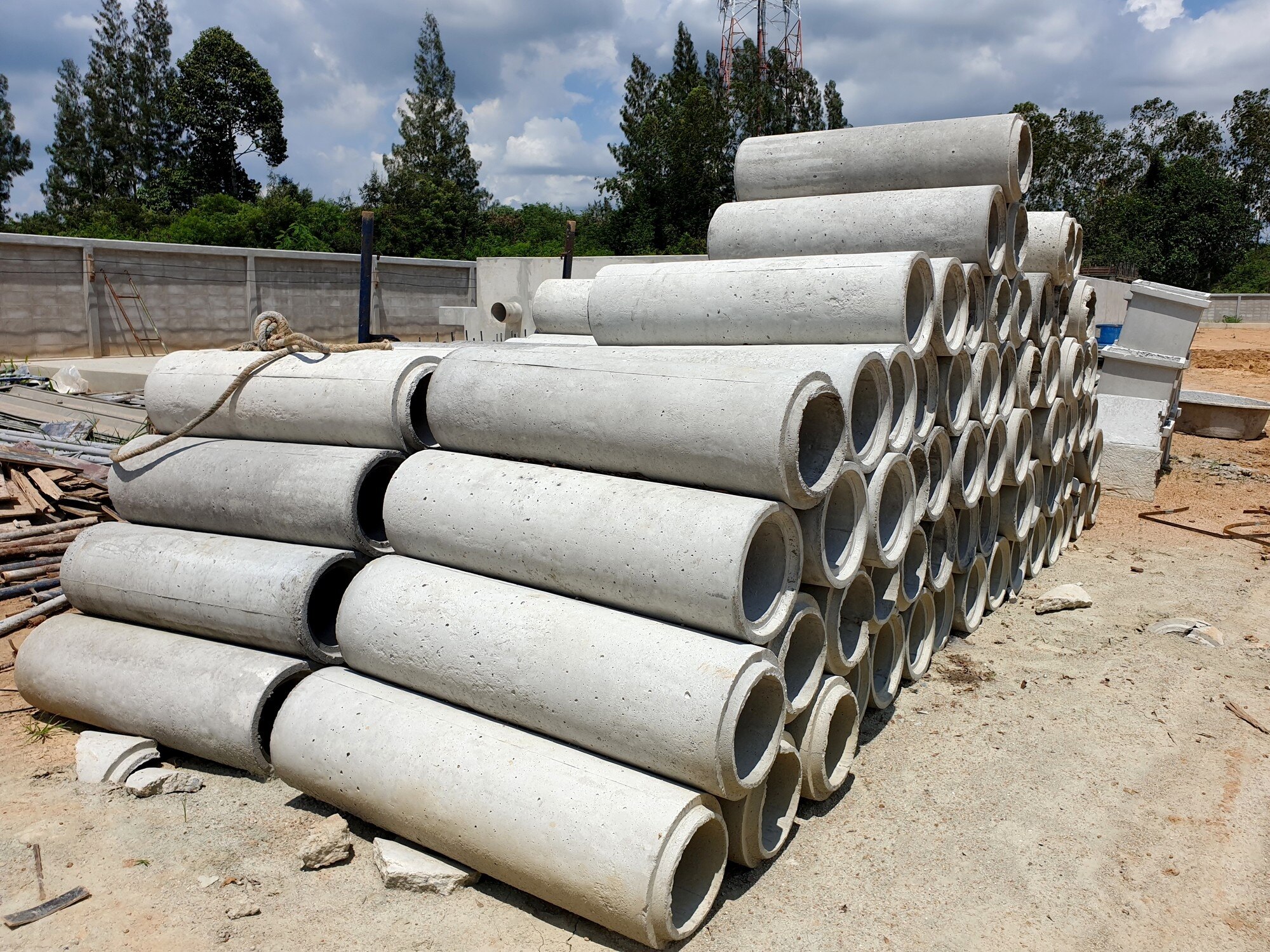
At delivery, reject or record longitudinal or radial cracks, exposed reinforcement, honeycombing, chipped spigots or sockets, damaged ends, dimensional variation and handling damage. Use suitable lifting gear and inspect unloading: RCC is heavy, and careless slings, dropping or side impacts can damage an edge before installation.
How should you compare an RCC supplier with other drainage options?
RCC is often the stronger whole-life choice where compression, earth pressure and traffic loads govern, but its weight can erase that advantage on a difficult site.
Compare installed cost and programme, not just material price: RCC needs heavier transport, crane or excavator unloading, wider trench access, and careful handling because chipped ends can delay jointing or require replacement.
| Option | Main strength | Cost or schedule issue |
|---|---|---|
| RCC | Resists compression, earth loads and traffic loading | Heavy handling, access equipment and edge-damage risk |
| HDPE | Light, flexible and easier to transport and place | Requires design checks for deflection, bedding and traffic loading |
| Other flexible pipe | Lower handling effort in suitable ground | Performance depends strongly on surround, joints and installation quality |
Ask an RCC round pipe manufacturer in Nagpur or RCC round pipe supplier in Nagpur to price the same scope. Compare:
- Internal diameter, effective length, NP class, reinforcement, specified concrete performance and dimensional tolerances
- Test certificates, inspection records, joint materials, seal specification and delivery condition
- Responsibility and replacement timing for cracked or chipped pipes
A local supplier such as Vishal Cement Product may reduce transport distance and lead time, but locality proves neither compliance nor durability. Require a written quotation confirming the applicable IS 458:2000 or IS 458:2003 edition, class, delivered batch records, joint system and seal specification.
Check that every dimension matches the drainage drawing, bill of quantities and invert schedule before ordering.
Related products
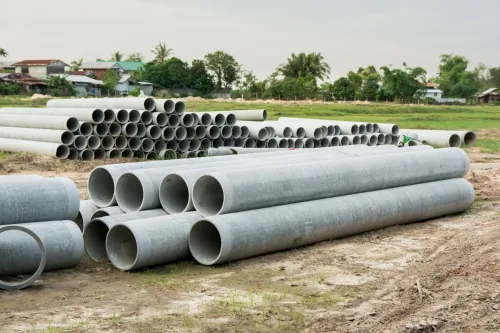
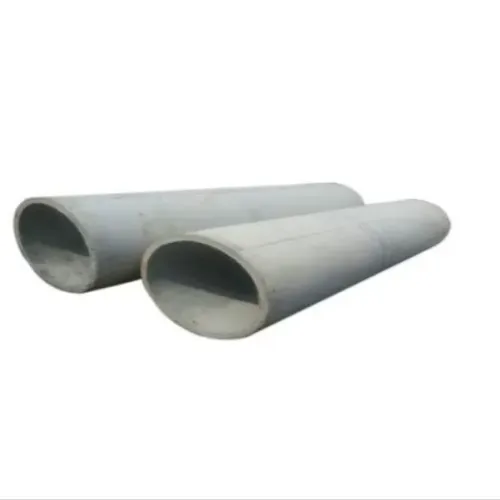
 | RCC Round Pipe Shape Round Pipe Type RCC Material RCC Thickness 30 mm Length 2.5meter Diameter 300 mm We have carved a niche amongst the most trusted names in this... View product → |
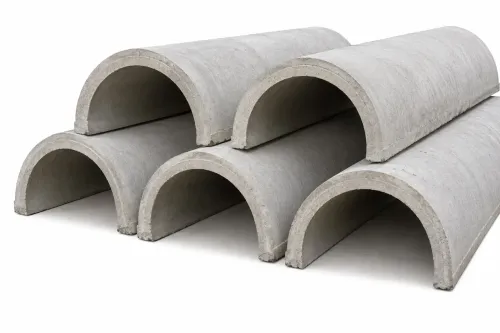
 | RCC Half Round Pipe Unit Pipe Length 3 meter Thickness 25-40 mm Material RCC Shape Half Round We have carved a niche amongst the most dominant names in this domain,... View product → |
Frequently asked questions
Will a 300 mm RCC pipe carry your design flow?
Only if its available hydraulic capacity exceeds peak runoff at the installed slope and water level. Estimate peak runoff with Qp = C × i × A, using the selected storm duration, return period, rainfall intensity and runoff coefficient.
Which diameter, dimensions and site conditions belong in the order?
State the internal diameter, pipe class, length, joint type, bedding requirements, trench conditions, cover depth, groundwater conditions and expected traffic loading. These details let the supplier match the pipe to the installation rather than quoting diameter alone.
Does NP2, NP3 or NP4 provide the required structural protection?
Choose the class from trench loading, cover depth, bedding quality and traffic exposure. NP4 provides more structural protection than NP3, while NP3 provides more than NP2; confirm the required class through the project design.
Will the joints and delivered pipes prevent drainage leakage?
Inspect each pipe for cracks, damaged sockets, exposed reinforcement and dimensional defects. Use the specified rubber-ring or cement-mortar joint system, align pipes accurately and check that bedding supports the full barrel.
How should you compare an RCC supplier with other drainage options?
Compare hydraulic capacity, structural performance, installation equipment, jointing requirements, delivery condition, lead time and total installed cost. A supplier such as Vishal Cement Product can be assessed against these criteria alongside plastic, steel or cast-in-place drainage options.
Related products
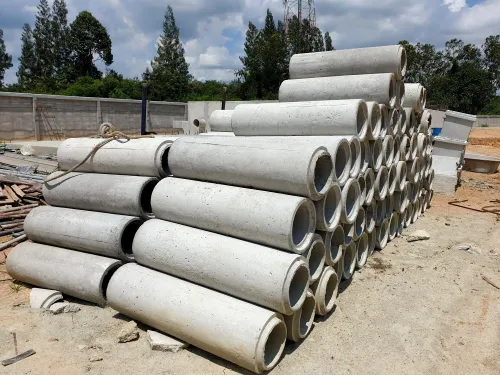
 | RCC Hume Pipe Size 300 mm Class NP2 Pipe Type RCC Material RCC Shape Round Diameter 300 mm Thickness 30 mm Leveraging the skills of our qualified team of... View product → |
 | Cement Spun Pipe Material Cement Usage/Application Drainage Diameter 150 mm Length 2.5 meter Shape Round We are a highly acknowledged organization, engaged in... View product → |
 | Concrete Pipe Pipe Type rcc pipe Diameter 600 mm Material RCC Length 2.5 meter Banking on the skills of our qualified team of professionals, we are involved in... View product → |
 | Concrete Spun Pipe Material Concrete Usage/Application Drainage Diameter 1200 MM Length 8 feet Shape Round We have been counted amongst the most trusted names in this... View product → |
Keywords