An 8-metre pole is not automatically suitable for every road, luminaire or overhead line. The right choice depends on the shaft section, working load, wind exposure, conductor arrangement, embedment and hardware fixed to it; by the end, you can compare square and PSC poles and prepare a specification that can be checked before delivery.
Key takeaways
- Size the pole for base moment, wind, luminaire, bracket and cable loads.
- Match pole strength and drilling details to the conductor arrangement.
- Check the 8-metre pole’s buried depth, clearance and available installation access.
- Compare RCC and PSC against lifting, transport and future line changes.
Choose the pole around the street-light load, not the nominal length
For a cement pole for street lighting in Nagpur, neither shape wins by name alone: select the section that resists the specified base moment from the luminaire, bracket and wind. A square RCC pole is usually the practical choice for one compact LED fitting with a short arm.
A rectangular PSC pole becomes more attractive for a longer outreach arm, twin luminaires, banners, CCTV or signs, where higher stiffness and controlled prestressed capacity matter.
| Option | Bracket and installation | Wind and future use |
|---|---|---|
| Square RCC cement pole | Simple face-mounted plate or socket; cable entry and access opening are easy to specify, but drilling after delivery can damage reinforcement | Suitable for modest luminaire area and short projection; heavier and less convenient to modify |
| Rectangular PSC pole | Strong, slender shaft; requires exact factory provision for plate, bolts, socket and cable route | Better where the design calls for greater stiffness or a higher base moment; an added arm can exceed the approved load |
The 44 m/s basic wind speed shown for Nagpur in IS 875 (Part 3) does not by itself select the pole. The design must include projected area, height, terrain, bracket angle and luminaire wind area.
Ask for these figures before ordering:
- Pole height above finished ground, embedment depth and foundation or socket arrangement
- Arm projection, angle, connection plate, bolt grade, cable entry and access opening
- Working load, allowable deflection, base moment and design wind load
- Concrete grade, cover, crack control and curing records for a concrete pole for lighting in Nagpur
Match the pole to the utility line and conductor arrangement
Your choice of cement poles for utility lines in Nagpur must follow the conductor arrangement, not the pole’s apparent height. A lighting pole designed for one luminaire does not automatically resist conductor tension, wind on wires and hardware, transverse pull, longitudinal pull, torsion or unbalanced loading.
| Line type | What changes | Selection consequence |
|---|---|---|
| Low-voltage distribution | Several conductors, longer spans and cross-arm hardware increase wind area and horizontal tension. | Check the pole class, working load, bending moment and foundation for the full span arrangement. |
| Service cable | A compact bundled cable reduces conductor spread, but service brackets and attachment points create concentrated eccentric loads. | Confirm bracket compatibility, cable sag, entry height and the load from each connection. |
| Telecom wire | Lower electrical risk does not mean negligible structural load; multiple cables, loops and messenger wires add wind and torsion. | Specify attachment spacing and reserve capacity for later cables instead of drilling the shaft on site. |
| Heavier electrical conductors | Larger conductors, longer spans, insulators and cross-arms produce higher transverse and longitudinal forces. | Use a utility-approved pole class and foundation design; a street-lighting specification is insufficient. |
Freeze the pole-top drawing before ordering. It must show the cross-arm, transformer support, AB-cable accessory, service bracket and stay fitting, where applicable. Changing a compact vertical layout to cross-arms can require a stronger pole or deeper foundation.
Apply the Central Electricity Authority safety regulations and the distribution utility’s construction practice for clearances, earthing, isolation and access. The final design must also account for conductor count, span length and stay direction.
Check whether an 8-metre pole actually fits the site
An 8-metre pole fits only after you confirm what the eight metres measure and what must remain above finished ground. If the stated length includes embedment, a 1.5-metre installation leaves about 6.5 metres exposed; if it means above-ground height, the total pole length and handling method change.
Road width sets the setback, bracket projection and lighting coverage. A narrow lane may need a shorter outreach arm to keep the luminaire over the carriageway, while a wide road may require greater mounting height, two-sided lighting or another pole position. Check footpath width, vehicle impact risk and access clearance before fixing the centre point.
For cement pole applications in Nagpur, freeze the finished-ground level against the site drawing, not an existing shoulder that may later be raised. Check these points before ordering:
- Measure the road, footpath, drain and property line from the proposed pole centre.
- Confirm the required luminaire height or lowest conductor height after allowing for embedment.
- Test soil bearing, loose fill, groundwater and hard strata; do not copy a standard embedment depth into weak or waterlogged ground.
- Specify the socket, footing or direct-burial detail, including concrete size, reinforcement, drainage and backfill.
- Check clearance after sag, wind sway and vehicle movement, not only the pole’s unloaded position.
A pole suitable for a compact light can fail as a utility pole when conductor tension, cross-arms or stays add bending and torsion. Freeze that top arrangement before selecting the 8-metre class.
Verify dimensions, load data and documents before ordering
A supplier’s phrase “8-metre pole” does not define suitability. For a cement pole for street lighting in Nagpur, record the finished height above ground, embedment depth, base and top dimensions, luminaire-arm projection, arm angle, connection plate or socket, cable-entry position, access opening and allowable luminaire wind area.
1. Request a dimensioned drawing showing pole length, taper, cross-section, wall or concrete section, hole positions, lifting points and foundation or socket detail. Check that the drawing matches the delivered pole, not just the catalogue image.
2. Ask for the declared working load, load-test method, permissible deflection, design bending moment, torsional capacity and wind-load basis. Include the complete fitting: arm, luminaire, CCTV camera, banner or signboard. An arm added after delivery can exceed the pole’s local design load.
3. Freeze the pole-top arrangement for cement poles for utility lines in Nagpur. State conductor count, span length, cross-arms, transformer supports, AB-cable accessories, service brackets, telecom attachments and stay fittings. These details create transverse, longitudinal, torsional and unbalanced loads that a lighting-pole specification does not cover.
4. Obtain the applicable compliance and quality documents: IS 785 for reinforced-concrete poles or IS 1678 for prestressed-concrete poles, the manufacturer’s test certificate, concrete or prestressing details, batch identification and inspection records. “RCC pole” without a standard and working-load class is incomplete.
For utility conductors, check electrical clearances, earthing, isolation and access against the Central Electricity Authority safety regulations and the distribution utility’s construction practice. A lighting pole is not acceptable for live lines merely because its height appears adequate.
Decide between ordinary reinforced concrete and PSC for installation and future changes
Prestressed concrete offers an advantage when the pole must carry higher bending demand, repeated wind loading, or a longer unsupported span without excessive deflection.
Ordinary reinforced concrete is easier to drill, anchor and alter, which matters when a concrete pole for lighting in Nagpur may later receive a camera, sign, banner or a different outreach arm.
| Option | Practical advantage | Choose it when |
|---|---|---|
| Ordinary RCC | Easier site modification and hardware attachment | The luminaire arrangement is simple and future changes are likely |
| PSC | Higher controlled working capacity with lower deflection for its section | The pole carries demanding hardware, larger wind area or utility-line tension |
For cement pole applications in Nagpur, settle the lighting design before manufacture; a street-lighting pole is not automatically suitable for conductors, stays or cross-arms. Vishal Cement Product can be asked to identify whether the proposed pole is an IS 785 reinforced-concrete pole or an IS 1678 prestressed-concrete pole, and to state its working-load class.
Confirm these installation details on the drawing, not by a site assumption:
- Luminaire and bracket mass, projection, bolt pattern, wind area and the resulting base moment.
- Pole-top height, cable-entry position, conduit diameter and access clearance from the road, footpath and trees.
- Embedment depth, socket or foundation dimensions, finished-ground level, drainage and lifting points.
- Allowance for future equipment, plus the permissible drilling zones and fixing method.
- Concrete cover, crack control and curing records where monsoon wetting, dust, drains or aggressive ground could accelerate deterioration.
Related products
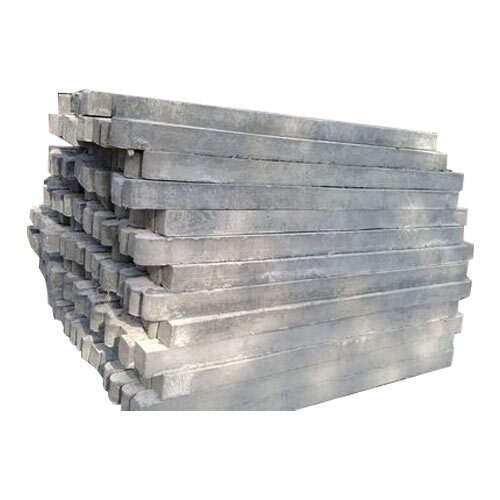 | Cement Pole Shape Square Material Cement Thickness (millimetre) 40 mm Width 4-6 Inch Length 8 Meter To meet the variegated demands of the clients, our company is... View product → |
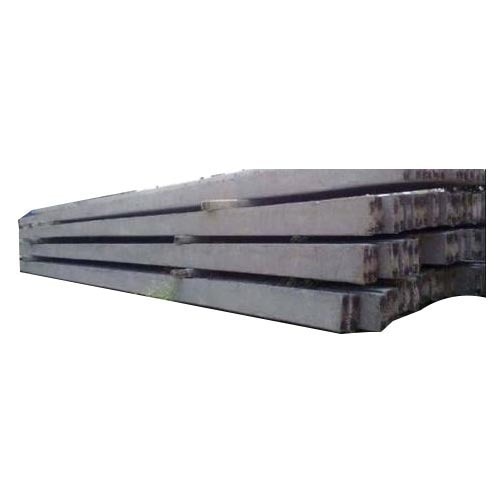 | PSC Electric Pole Shape Rectangular Material Concrete Length 8 Meter Thickness 40 mm Matching up with the ever increasing requirements of the customers, we are engaged... View product → |
Frequently asked questions
How should you choose a cement pole for street lighting in Nagpur?
Choose the pole using the specified base moment from the luminaire, bracket and wind, rather than nominal pole length. A square RCC pole suits one compact LED fitting with a short arm when its rated load matches the design.
Which cement pole suits utility lines in Nagpur?
Match the pole’s strength, top configuration and fixing or drilling details to the conductor arrangement, cross-arms, insulators, cable weight and span. Do not select a pole from length alone.
Does an 8-metre cement pole fit every lighting site?
No. Check the above-ground height after burying the pole, foundation depth, road clearance, luminaire outreach, overhead obstructions and whether lifting equipment can reach the installation point.
What should you verify before ordering a cement pole?
Request the pole dimensions, section details, reinforcement or prestressing information, working-load or bending-moment data, test records, batch identification and applicable supply documents.
Should you choose RCC or PSC cement poles?
Choose ordinary RCC when handling and future drilling or modifications are straightforward. Consider PSC when its higher strength-to-weight performance suits transport, lifting and the planned line, while checking restrictions on later cutting or drilling.
Keywords